Recognising the Expertise of People with Disability
While "disability lived experience" is frequently talked about in policy and research, it is too often treated as a token gesture. The deep knowledge held by disabled people is frequently reduced to stories of personal suffering or dismissed as merely emotional. This creates a frustrating divide, treating disabled people as passive "informants" rather than the experts who should be leading systemic change.
To challenge this, our research highlights a crucial difference:
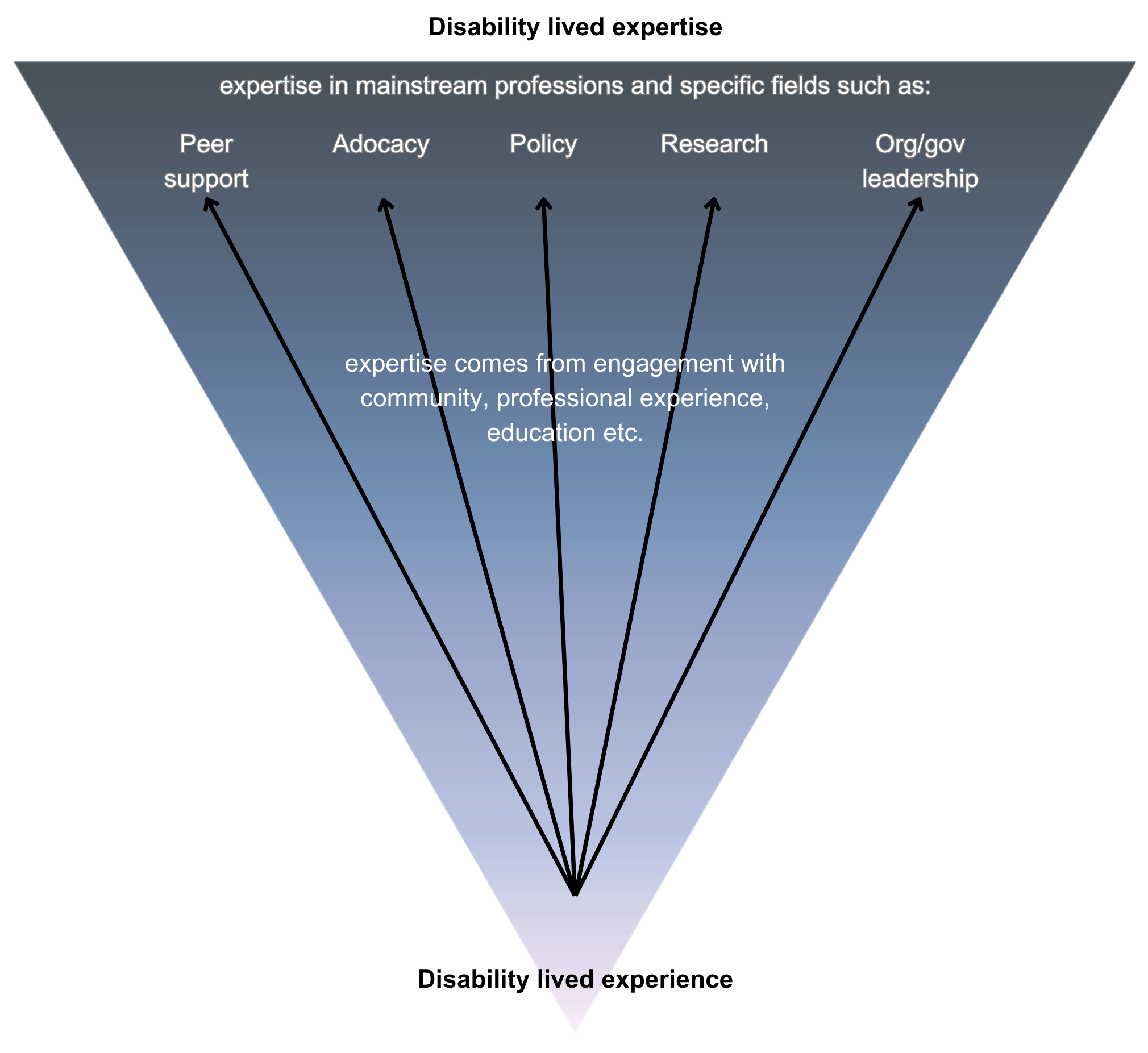
Disability Lived Experience: The personal, day-to-day reality of navigating an ableist world.
Disability Lived Expertise: The vital skill that combines personal experience with a deep understanding of disability history, rights, collective community values, and the strategic advocacy needed to redesign our social environment.
Co-designed by a diverse collective scholars, advocates, and practitioners with disability, this project aims to shift the balance of power. By establishing a clear framework for disability lived expertise, we are working to ensure disabled voices are genuinely valued, properly credited, and empowered to lead the way toward an inclusive society.
Summary Reports

Peer-Reviewed Research and Other Reports

-
Clifton, S., Cooper, E., Bourke, J., Connor, S., Denton, S., Dominish, B., Gibellini, C., Gilroy, J., Hallahan, L., Jessep, S., Katterl, S., Mellifont, D., O’Brien, B., Farrant, F. Q., Watharow, A. and Wynn, R. (2025) ‘Disability lived experience and expertise: recognising the expert contributions of people with disability’, Evidence & Policy, 21(4), pp. 578–595.
ABSTRACT:
Co-authored by sixteen scholars and advocates with diverse disabilities, this landmark paper challenges prevailing interpretations of ‘lived experience’ that reduce disabled perspectives to subjective narratives of suffering. The authors introduce a dynamic conceptual framework that distinguishes between raw lived experience and developed disability lived expertise—a capability built through systemic knowledge, community engagement, and critical reflection. The article outlines essential leadership qualities and skills required to dismantle tokenistic structures, legitimise the expert contributions of disabled professionals, and fundamentally reshape institutional governance, public policy, and academic research.
-
Clifton, S., Cooper, E., Bourke, J., Connor, S., Denton, S., Dominish, B., Drinkwater, A., Gibellini, C., Gilroy, J., Hallahan, L., Jessep, S., Katterl, S., Mellifont, D., O’Brien, B., Quan Farrant, F., Watharow, A. and Wynn, R. (2025) ‘A framework for disability lived expertise’, Evidence & Policy, (published online ahead of print).
ABSTRACT
This article introduces a comprehensive framework designed to address the systemic undervaluing of disabled contributions across policy, education, and research. The paper defines the leadership qualities, core values, and essential knowledge that constitute disability lived expertise. By conceptualising this expertise as a dynamic capability nurtured through critical reflection and community engagement, the framework provides a practical roadmap to validate marginalised knowledge, disrupt ableist power structures, and empower people with disability in executive and governance roles.
-
Bennett, J., Tattersall, A., McCormack, B., Moore, K., Mellifont, D., Conley Wright, A., Fennis, L., Krayem, G., Sawan, M., Huber, E., O’Callaghan, M., (2024), Sydney Policy Lab, the University of Sydney